Too Many Features… and Not Enough Clarity: Rethinking the Event Platform Experience
In the event industry, digital platforms have become true Swiss Army knives. Registration and ticketing, networking, multimedia content, automated communications, partner management, statistics, access control… the possibilities are endless, and this is generally presented as a major advantage.
But in reality, this abundance can quickly become an obstacle.
Most events only use a portion of the features available within a platform. Yet many solutions continue displaying every module, option, and setting to all users, regardless of their actual needs. The result: interfaces become heavy, menus overcrowded, and organizers are forced to navigate through large amounts of information that often have nothing to do with their event.
For many teams, especially those who do not work daily with complex technological tools, this overload creates confusion and a lack of clarity. Some functionalities go completely unnoticed, while others are activated unnecessarily, adding complexity to projects that should remain simple to manage.
The issue, therefore, is not necessarily the number of features offered. The real challenge lies in a platform’s ability to present only what is truly relevant for each event.
Every event has its own structure, objectives, and priorities. A business trade show focused on B2B meetings does not have the same needs as an educational conference, a networking activity, or an internal corporate event.
Some organizations require advanced smart matchmaking and appointment scheduling tools, while others focus more heavily on content distribution, registrations, or communication management. In many cases, certain features will simply never be used.
For several years now, PairConnex has been developing its platform around one simple principle: adapting the management experience to the reality of each event, rather than imposing a standardized interface on every organizer.
To achieve this, PairConnex developed a project creation assistant integrated directly into the setup process of every new event.
Through an intelligent questionnaire, this assistant helps organizers define their real needs before they even begin configuring their platform. Depending on the nature of the event and the answers provided, certain questions automatically appear or disappear to further explore only the relevant elements.
An organizer who wishes to use networking features will be presented with additional questions related to meetings, matchmaking, or participant profiles. Conversely, a project that does not require these functionalities will never be cluttered with unnecessary options.
The goal is not to make setup more complex. On the contrary, this approach helps structure teams’ thinking and prevents many common oversights when launching an event project.
In just a few minutes, clients can build a platform that is far better aligned with their actual operational needs.
Once the questionnaire is completed, PairConnex automatically personalizes the project’s administration environment.
In practical terms, this means certain sections may completely disappear from the interface if they are not being used. Menus become simpler, navigation becomes clearer, and administrators can focus exclusively on the tools that will genuinely be useful to them.
This approach significantly transforms the user experience.
Instead of having to understand dozens of features from day one, teams progressively discover an environment adapted to their reality. The platform immediately feels more accessible, even for users who are less comfortable with technology.
This simplification also has a direct impact on client autonomy. By reducing distractions and unnecessary elements, organizers can accomplish more tasks on their own without constantly needing guidance or technical support.
The objective is not to limit the platform’s capabilities. All functionalities remain available whenever needed. The difference is that they only appear when they become truly relevant.
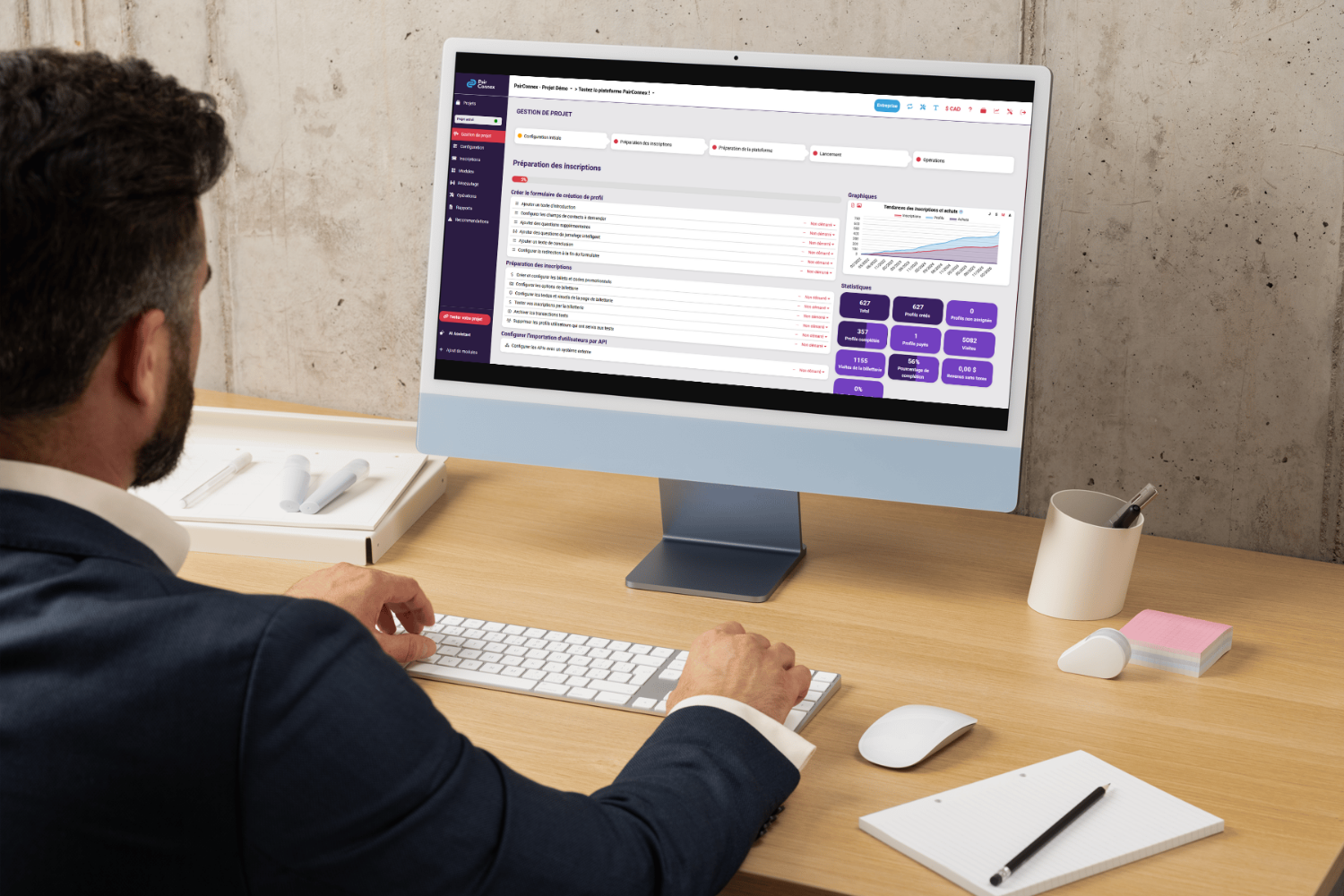
Customization goes even further with PairConnex’s integrated project management tool.
Every project includes a structured roadmap built around the major stages of an event: initial configuration, registration preparation, launch, operational preparation, event execution, and post-event follow-up.
Within each of these stages, administrators are provided with detailed task lists designed to guide them throughout the entire project.
But unlike a generic project management tool, the tasks displayed in PairConnex are directly connected to the modules and functionalities activated for the event.
For example, a project that does not use networking will never display tasks related to matchmaking or participant meetings. On the other hand, if an additional module is activated later in the process, the necessary new steps will automatically appear in the project management workflow.
This logic allows teams to stay focused on the right priorities at the right time, without having to manually sort through what is relevant and what is not.
An event constantly evolves. New ideas emerge, priorities shift, and opportunities can arise throughout the project.
That is why personalization should never become rigid.
Within PairConnex, organizers can add or remove functionalities at any time. Whether it involves integrating ticketing, activating a networking module, adding a media library, or deploying partner showcases, the platform automatically adapts to this new reality.
The interface, menus, and project management tools then evolve accordingly, without requiring teams to restart their configuration from scratch.
This flexibility allows organizations to grow and adapt their event more easily while maintaining a clear and structured work environment.
As the event industry continues evolving, platforms have become increasingly comprehensive in order to support a wide variety of realities and event formats.
Today, organizer expectations are changing.
Teams are looking for tools that are powerful, but also easy to understand, simple to use, and capable of adapting to their operational reality. A platform’s performance is no longer measured solely by the richness of its features, but also by its ability to guide users effectively.
Ultimately, a great event platform should not force organizers to adapt to the tool. Instead, the platform itself should adapt to the event.
And that is precisely the philosophy guiding PairConnex’s personalization approach: delivering all the power required for complex events while maintaining a clear, accessible experience centered around the real needs of every project.
But in reality, this abundance can quickly become an obstacle.
Most events only use a portion of the features available within a platform. Yet many solutions continue displaying every module, option, and setting to all users, regardless of their actual needs. The result: interfaces become heavy, menus overcrowded, and organizers are forced to navigate through large amounts of information that often have nothing to do with their event.
For many teams, especially those who do not work daily with complex technological tools, this overload creates confusion and a lack of clarity. Some functionalities go completely unnoticed, while others are activated unnecessarily, adding complexity to projects that should remain simple to manage.
The issue, therefore, is not necessarily the number of features offered. The real challenge lies in a platform’s ability to present only what is truly relevant for each event.
A Different Reality for Every Event
Every event has its own structure, objectives, and priorities. A business trade show focused on B2B meetings does not have the same needs as an educational conference, a networking activity, or an internal corporate event.
Some organizations require advanced smart matchmaking and appointment scheduling tools, while others focus more heavily on content distribution, registrations, or communication management. In many cases, certain features will simply never be used.
For several years now, PairConnex has been developing its platform around one simple principle: adapting the management experience to the reality of each event, rather than imposing a standardized interface on every organizer.
A Configuration Built Around Real Needs
To achieve this, PairConnex developed a project creation assistant integrated directly into the setup process of every new event.
Through an intelligent questionnaire, this assistant helps organizers define their real needs before they even begin configuring their platform. Depending on the nature of the event and the answers provided, certain questions automatically appear or disappear to further explore only the relevant elements.
An organizer who wishes to use networking features will be presented with additional questions related to meetings, matchmaking, or participant profiles. Conversely, a project that does not require these functionalities will never be cluttered with unnecessary options.
The goal is not to make setup more complex. On the contrary, this approach helps structure teams’ thinking and prevents many common oversights when launching an event project.
In just a few minutes, clients can build a platform that is far better aligned with their actual operational needs.
An Interface That Automatically Adapts
Once the questionnaire is completed, PairConnex automatically personalizes the project’s administration environment.
In practical terms, this means certain sections may completely disappear from the interface if they are not being used. Menus become simpler, navigation becomes clearer, and administrators can focus exclusively on the tools that will genuinely be useful to them.
This approach significantly transforms the user experience.
Instead of having to understand dozens of features from day one, teams progressively discover an environment adapted to their reality. The platform immediately feels more accessible, even for users who are less comfortable with technology.
This simplification also has a direct impact on client autonomy. By reducing distractions and unnecessary elements, organizers can accomplish more tasks on their own without constantly needing guidance or technical support.
The objective is not to limit the platform’s capabilities. All functionalities remain available whenever needed. The difference is that they only appear when they become truly relevant.
Integrated and Personalized Project Management
Customization goes even further with PairConnex’s integrated project management tool.
Every project includes a structured roadmap built around the major stages of an event: initial configuration, registration preparation, launch, operational preparation, event execution, and post-event follow-up.
Within each of these stages, administrators are provided with detailed task lists designed to guide them throughout the entire project.
But unlike a generic project management tool, the tasks displayed in PairConnex are directly connected to the modules and functionalities activated for the event.
For example, a project that does not use networking will never display tasks related to matchmaking or participant meetings. On the other hand, if an additional module is activated later in the process, the necessary new steps will automatically appear in the project management workflow.
This logic allows teams to stay focused on the right priorities at the right time, without having to manually sort through what is relevant and what is not.
A Platform That Evolves with Your Needs
An event constantly evolves. New ideas emerge, priorities shift, and opportunities can arise throughout the project.
That is why personalization should never become rigid.
Within PairConnex, organizers can add or remove functionalities at any time. Whether it involves integrating ticketing, activating a networking module, adding a media library, or deploying partner showcases, the platform automatically adapts to this new reality.
The interface, menus, and project management tools then evolve accordingly, without requiring teams to restart their configuration from scratch.
This flexibility allows organizations to grow and adapt their event more easily while maintaining a clear and structured work environment.
Prioritizing Relevance Over Quantity
As the event industry continues evolving, platforms have become increasingly comprehensive in order to support a wide variety of realities and event formats.
Today, organizer expectations are changing.
Teams are looking for tools that are powerful, but also easy to understand, simple to use, and capable of adapting to their operational reality. A platform’s performance is no longer measured solely by the richness of its features, but also by its ability to guide users effectively.
Ultimately, a great event platform should not force organizers to adapt to the tool. Instead, the platform itself should adapt to the event.
And that is precisely the philosophy guiding PairConnex’s personalization approach: delivering all the power required for complex events while maintaining a clear, accessible experience centered around the real needs of every project.