The comeback of the badge: when the badge becomes a strategic tool
In the world of business events, the badge has never truly disappeared. It has always structured the welcome process, simplified identification, and made roles visible within the first few seconds. Name, organization, title: at a glance, it helps start a conversation.
With the rise of paperless approaches, some considered moving away from it. Yet on the ground, reality tells a different story. Participants appreciate being able to identify themselves quickly, without taking out their phones. Interactions feel smoother and more natural. And today, the badge is no longer limited to a printed medium: it has become a connection point between the physical and the digital.
This is not a step backward. It is an evolution.
Traditionally, the badge served a simple purpose: confirming a participant’s identity and status. Once printed, it did not interact with any other system. It existed independently from registration, access control, or networking tools.
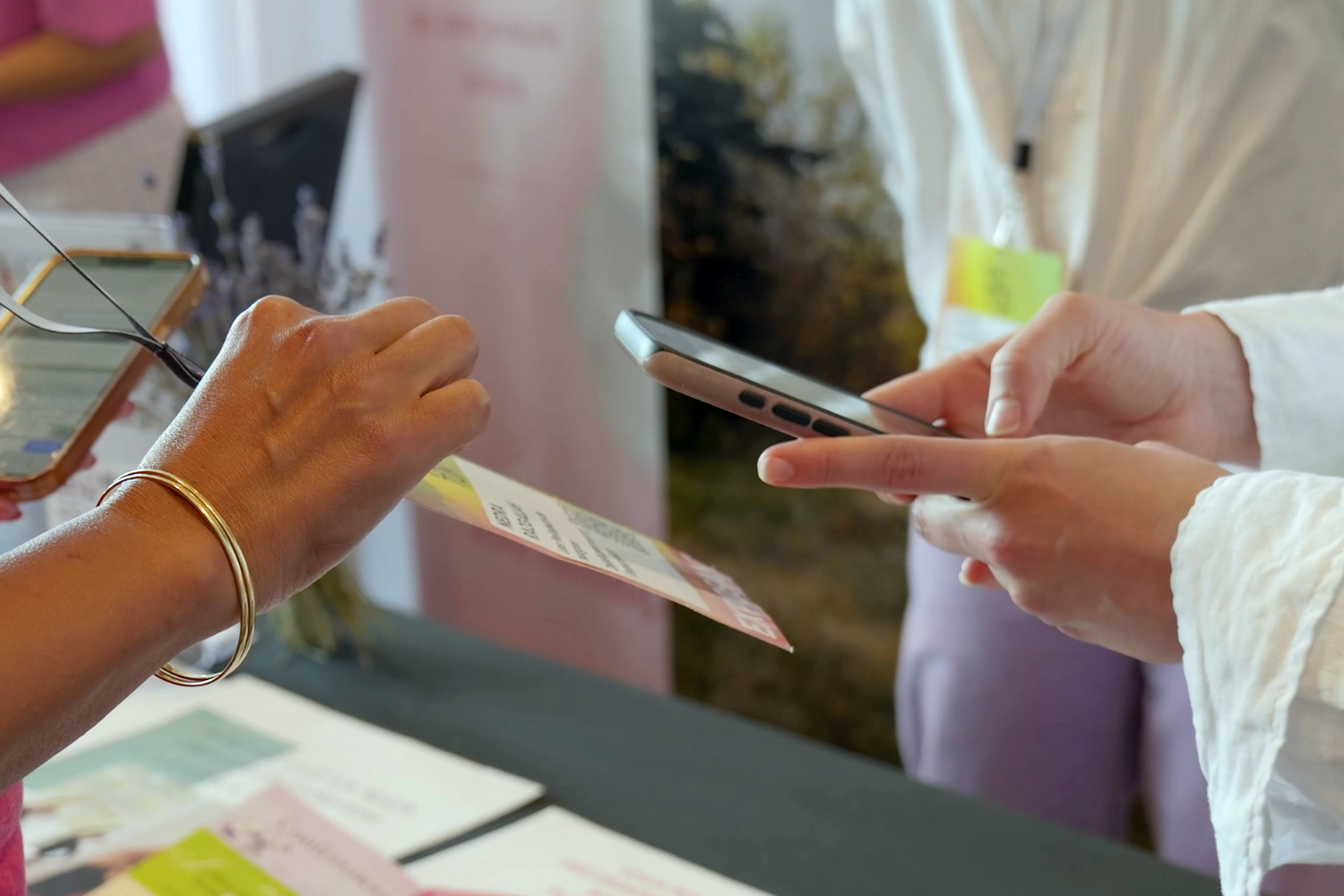
The integration of a digital identifier, often in the form of a QR code, completely changes the dynamic. Without altering its physical form, the badge becomes connected to the event’s technological environment. A simple scan links a person to their profile, access rights, or interactions.
It remains a tangible object, but it now acts as a bridge between on site logistics and the event platform.
At check in or during accreditation distribution, the connected badge transforms the experience. Instead of managing printed lists or manual validations, teams can rely on an integrated access control system. Scanning a badge makes it possible to:
When integrated with an accreditation and badge module and an event access control system , the badge becomes a unique identifier that connects planning with on site operations. The result: shorter wait times, fewer errors, and better crowd flow management.
In a B2B event context, value largely depends on meetings. The connected badge facilitates these interactions. Instead of exchanging business cards or taking quick notes, a scan directly links two profiles within the platform. Contact details are saved, structured, and accessible after the event.
When this process is integrated with networking and intelligent matchmaking tools , the badge becomes a concrete lever to maximize meaningful interactions. Technology does not replace conversation. It ensures continuity. The experience remains human. The follow up becomes strategic.
For exhibitors, the connected badge represents far more than a practical tool.
At the booth, scanning a badge links a conversation to a specific profile. Information is centralized, structured, and ready for post event follow up. Instead of collecting scattered business cards or notes, exhibitors benefit from a fully integrated lead retrieval process.
This changes the perception of return on investment. On site interactions no longer disappear into fragmented files. They become part of a clear continuity between the trade show floor and the post event phase.
The strength of the connected badge lies in this overall consistency. Before the event, it is linked to registration and the participant profile through the platform. During the event, it supports welcome, access control, networking, and lead collection. After the event, it helps consolidate participation and interaction data.
The badge no longer simply identifies. It validates, connects, and structures. This integration logic, supported by solutions like PairConnex, restores strategic relevance to this traditional tool.
When well designed, the badge also maintains operational simplicity. It can be produced responsibly, using recycled materials and adapted formats, while integrating into a complete digital environment.
It is therefore not a choice between paper and technology. It is a complementarity. The comeback of the badge is not about its format, but about its role. In a structured business event, it becomes the visible anchor point of a connected ecosystem. Subtle in appearance, strategic in depth.
With the rise of paperless approaches, some considered moving away from it. Yet on the ground, reality tells a different story. Participants appreciate being able to identify themselves quickly, without taking out their phones. Interactions feel smoother and more natural. And today, the badge is no longer limited to a printed medium: it has become a connection point between the physical and the digital.
This is not a step backward. It is an evolution.
FROM IDENTIFICATION TOOL TO DIGITAL ANCHOR POINT
Traditionally, the badge served a simple purpose: confirming a participant’s identity and status. Once printed, it did not interact with any other system. It existed independently from registration, access control, or networking tools.
The integration of a digital identifier, often in the form of a QR code, completely changes the dynamic. Without altering its physical form, the badge becomes connected to the event’s technological environment. A simple scan links a person to their profile, access rights, or interactions.
It remains a tangible object, but it now acts as a bridge between on site logistics and the event platform.
WELCOME AND ACCESS CONTROL: MORE FLOW, LESS FRICTION
At check in or during accreditation distribution, the connected badge transforms the experience. Instead of managing printed lists or manual validations, teams can rely on an integrated access control system. Scanning a badge makes it possible to:
- validate registration in real time
- confirm access rights to specific areas or activities
- accurately record attendance
When integrated with an accreditation and badge module and an event access control system , the badge becomes a unique identifier that connects planning with on site operations. The result: shorter wait times, fewer errors, and better crowd flow management.
NETWORKING: SIMPLIFYING CONNECTIONS WITHOUT WEIGHING DOWN THE EXCHANGE
In a B2B event context, value largely depends on meetings. The connected badge facilitates these interactions. Instead of exchanging business cards or taking quick notes, a scan directly links two profiles within the platform. Contact details are saved, structured, and accessible after the event.
When this process is integrated with networking and intelligent matchmaking tools , the badge becomes a concrete lever to maximize meaningful interactions. Technology does not replace conversation. It ensures continuity. The experience remains human. The follow up becomes strategic.
EXHIBITORS: FROM SCAN TO BUSINESS OPPORTUNITY
For exhibitors, the connected badge represents far more than a practical tool.
At the booth, scanning a badge links a conversation to a specific profile. Information is centralized, structured, and ready for post event follow up. Instead of collecting scattered business cards or notes, exhibitors benefit from a fully integrated lead retrieval process.
This changes the perception of return on investment. On site interactions no longer disappear into fragmented files. They become part of a clear continuity between the trade show floor and the post event phase.
CONTINUITY BEFORE, DURING, AND AFTER THE EVENT
The strength of the connected badge lies in this overall consistency. Before the event, it is linked to registration and the participant profile through the platform. During the event, it supports welcome, access control, networking, and lead collection. After the event, it helps consolidate participation and interaction data.
The badge no longer simply identifies. It validates, connects, and structures. This integration logic, supported by solutions like PairConnex, restores strategic relevance to this traditional tool.
A TANGIBLE TOOL, STILL RELEVANT
When well designed, the badge also maintains operational simplicity. It can be produced responsibly, using recycled materials and adapted formats, while integrating into a complete digital environment.
It is therefore not a choice between paper and technology. It is a complementarity. The comeback of the badge is not about its format, but about its role. In a structured business event, it becomes the visible anchor point of a connected ecosystem. Subtle in appearance, strategic in depth.