Networking: Adding Value to Your Event

An event can have several objectives: sharing knowledge, showcasing new developments, bringing a community together or creating business opportunities. The program, activities and tools are generally designed around these priorities.
Beyond the content, however, the people attending also contribute to the value of the experience. A conversation between sessions, an exchange with an exhibitor or a meeting between professionals facing similar challenges can be just as valuable as a scheduled activity.
Recent research confirms the importance of these connections. In the Why We Gather report published by Hilton and Ipsos in 2026, 49% of respondents say that meeting new people and strengthening connections with their team will be their main reason for attending work events in 20261. Freeman, meanwhile, reports that 51% of attendees surveyed associate successful networking with the desire to return to an event2.
Networking does not have to be an event’s main purpose to deserve a place in it. By facilitating connections, organizers can enrich the attendee experience while supporting their event’s primary objective.
When we talk about event networking, business meetings often come to mind. Yet opportunities to connect can take many other forms: scheduled or virtual meetings, suggested connections based on attendee profiles, searches in the attendee directory or conversations with exhibitors and partners.
These opportunities are complemented by spontaneous conversations during breaks or after a session. Each event can incorporate networking in its own way, based on its context, audience and available time.
Bringing people together in the same place does not always lead to connections. At an event with several hundred attendees, it can be difficult to know who is there, whom to meet or how to start a conversation.
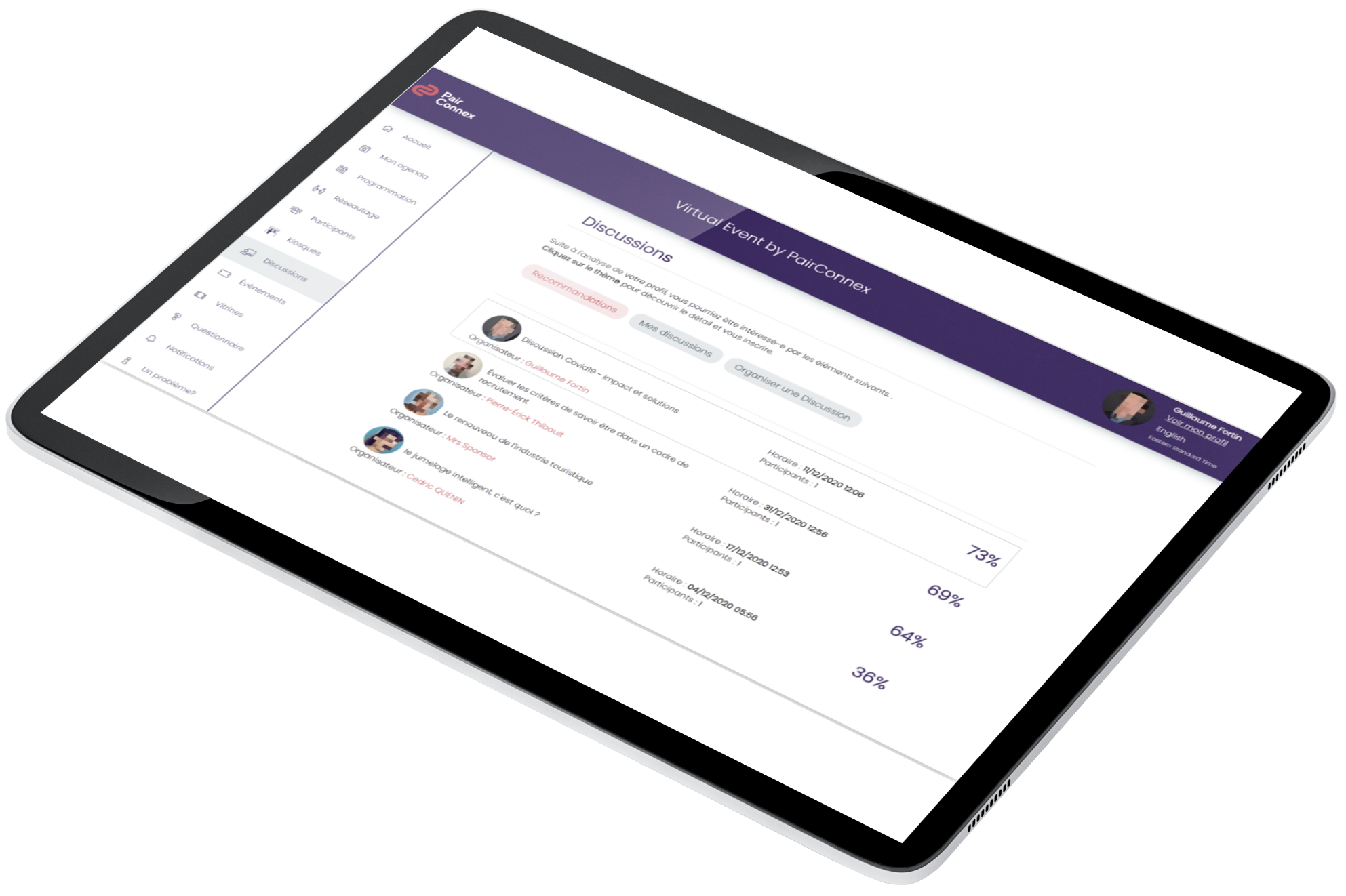
A profile that outlines an attendee’s industry, expertise, interests or needs gives others useful guidance. In PairConnex, attendee searches and meeting recommendations based on a compatibility score help people identify relevant profiles and plan conversations that align with their goals. The aim is to spend time on connections that are meaningful to each person.
Some attendees like to identify the people they want to meet and book appointments in advance. Others prefer to discover connections on site as activities unfold. These approaches complement each other: scheduled meetings make room for conversations in a busy agenda, while free time encourages unexpected exchanges.
For organizers, this may mean allowing time between activities, providing spaces that encourage conversation and introducing the available tools before the event. Attendees remain free to choose how they participate.
A conference may focus on sharing knowledge, a training session on developing skills and a corporate event on engaging a team. Connections can reinforce each of these objectives.
After a presentation, professionals can compare their practices and discuss how to apply the ideas shared. During a training session, attendees who discover similar challenges can discuss them and explore solutions together. On an exhibition floor, a supplier can offer a practical answer to a need raised during an activity.
Networking therefore goes beyond commercial exchanges: it also supports sharing ideas, collective thinking, peer learning and mutual support to help each person achieve their goals. Freeman’s July 2026 report also finds that attendees place slightly greater value on learning through networking and exhibitor interactions than on traditional conference sessions3.
A conversation started at an event can lead to sharing resources, collaborating or exchanging ideas with peers a few weeks later. Attendees leave with knowledge, but also with people they can turn to or work with on a future project.
Even when networking is not central to the program, it can contribute to attendee satisfaction and the desire to return. Allowing time, offering opportunities to meet and providing tools such as those available in PairConnex give these conversations a place in the event experience.
1. Hilton / Ipsos — Why We Gather, January 20, 2026. Survey of 3,150 adults in the United States, the United Kingdom and India planning to attend an in-person work event.
2. Freeman — Networking Trends Report, July 2025, p. 16.
3. Freeman — Learning Report, Part 2, July 23, 2026.
Beyond the content, however, the people attending also contribute to the value of the experience. A conversation between sessions, an exchange with an exhibitor or a meeting between professionals facing similar challenges can be just as valuable as a scheduled activity.
Recent research confirms the importance of these connections. In the Why We Gather report published by Hilton and Ipsos in 2026, 49% of respondents say that meeting new people and strengthening connections with their team will be their main reason for attending work events in 20261. Freeman, meanwhile, reports that 51% of attendees surveyed associate successful networking with the desire to return to an event2.
Networking does not have to be an event’s main purpose to deserve a place in it. By facilitating connections, organizers can enrich the attendee experience while supporting their event’s primary objective.
Multiple Ways to Connect
When we talk about event networking, business meetings often come to mind. Yet opportunities to connect can take many other forms: scheduled or virtual meetings, suggested connections based on attendee profiles, searches in the attendee directory or conversations with exhibitors and partners.
These opportunities are complemented by spontaneous conversations during breaks or after a session. Each event can incorporate networking in its own way, based on its context, audience and available time.
Making Relevant Connections Easier
Bringing people together in the same place does not always lead to connections. At an event with several hundred attendees, it can be difficult to know who is there, whom to meet or how to start a conversation.
A profile that outlines an attendee’s industry, expertise, interests or needs gives others useful guidance. In PairConnex, attendee searches and meeting recommendations based on a compatibility score help people identify relevant profiles and plan conversations that align with their goals. The aim is to spend time on connections that are meaningful to each person.
Combining Scheduled and Spontaneous Meetings
Some attendees like to identify the people they want to meet and book appointments in advance. Others prefer to discover connections on site as activities unfold. These approaches complement each other: scheduled meetings make room for conversations in a busy agenda, while free time encourages unexpected exchanges.
For organizers, this may mean allowing time between activities, providing spaces that encourage conversation and introducing the available tools before the event. Attendees remain free to choose how they participate.
Conversations That Extend Learning
A conference may focus on sharing knowledge, a training session on developing skills and a corporate event on engaging a team. Connections can reinforce each of these objectives.
After a presentation, professionals can compare their practices and discuss how to apply the ideas shared. During a training session, attendees who discover similar challenges can discuss them and explore solutions together. On an exhibition floor, a supplier can offer a practical answer to a need raised during an activity.
Networking therefore goes beyond commercial exchanges: it also supports sharing ideas, collective thinking, peer learning and mutual support to help each person achieve their goals. Freeman’s July 2026 report also finds that attendees place slightly greater value on learning through networking and exhibitor interactions than on traditional conference sessions3.
Value That Lasts Beyond the Event
A conversation started at an event can lead to sharing resources, collaborating or exchanging ideas with peers a few weeks later. Attendees leave with knowledge, but also with people they can turn to or work with on a future project.
Even when networking is not central to the program, it can contribute to attendee satisfaction and the desire to return. Allowing time, offering opportunities to meet and providing tools such as those available in PairConnex give these conversations a place in the event experience.
Sources
1. Hilton / Ipsos — Why We Gather, January 20, 2026. Survey of 3,150 adults in the United States, the United Kingdom and India planning to attend an in-person work event.
2. Freeman — Networking Trends Report, July 2025, p. 16.
3. Freeman — Learning Report, Part 2, July 23, 2026.