Beyond the Program: Putting the Attendee Experience at the Heart of Event Success

Choosing relevant topics, inviting engaging speakers and building a strong program are central to planning many business events. They give attendees a reason to register and help them understand what they can gain from taking part.
But the attendee experience extends well beyond what happens on stage. It begins before arrival, continues between activities and carries on after departure. Whether it is a convention, a conference, a trade show or a networking event, the entire journey contributes to the value of attending.
At a time when professional content is just a few clicks away, one question deserves a central place in event design: what will attendees experience in person that makes the travel, time and investment worthwhile?
The IACC 2025 Meeting Room of the Future report illustrates the attention being paid to the overall experience. Among the planners surveyed in Europe and North America, 55% identify a venue’s physical characteristics as one of the most important aspects supporting meeting objectives. Food and beverage offerings and educational content follow, at 50% each. The report notes, however, that content remains the top priority in North America.1
These findings invite us to consider the conditions in which attendees will engage with content and connect with others. Acoustics that make conversation possible, places to sit between activities and meals that leave time for discussion are all choices that shape the experience.
For organizers, this means giving the experience surrounding the program as much care as the program itself. It requires setting aside time, space and opportunities for participation that support the event’s objectives.
People attending the same convention do not all come for the same reasons. Some want to explore a topic in greater depth or solve a professional challenge. Others are looking for partners, suppliers or peers with whom they can compare practices.
A few questions during registration or profile creation can help identify these expectations: which topics interest them? What challenges do they face? What kinds of connections do they want to make? Their answers can guide both the choice of complementary activities and how those activities are presented.
A session on a management challenge could lead into a peer discussion. A technical topic could be followed by consultations with experts. An attendee looking for solutions could be directed toward relevant exhibitors. Each option becomes another way to address an identified need.
In its 2026 report on learning at conferences and trade shows, Freeman found that attendees would ideally spend 54% of their learning time outside traditional session rooms. Peer conversations, exhibitor interactions and demonstrations are among these learning opportunities.2 This provides a concrete reason to make room for these experiences in the program.
At an event supported by PairConnex, an organizer wanted to structure conversations around shared interests. The solution was simple: themed discussion tables, each limited to ten people. Attendees could reserve a seat at the table whose topic interested them, subject to availability.
This format gave conversations a starting point: a shared topic, a small group and dedicated time to talk. It offered attendees an opportunity to discuss their professional realities with people who had chosen the same subject.
Meetings with experts are another option our clients use. Scheduled time slots allow attendees to book a one-on-one conversation or a small-group meeting. They can ask questions specific to their situation and explore an issue raised during the event in more depth. A partner or sponsor can also contribute by sharing their expertise with attendees, provided the meeting continues to offer meaningful advice.
These formats require preparation: choosing specific topics, explaining what attendees can gain, scheduling sessions that fit with the rest of the program and making sign-up simple. Reservations then help organizers gauge interest and adjust the offerings as needed.
When presentations, discussions, consultations and exhibitor visits are all available, attendees need to be able to identify the options that meet their needs. This is where an event platform can contribute directly to the experience.
A program organized by theme makes it easier to explore the options. Activity selection tools allow attendees to reserve a place in a workshop or at a discussion table and build a personalized schedule. Exhibitors can be grouped by category to make relevant solutions easier to find.
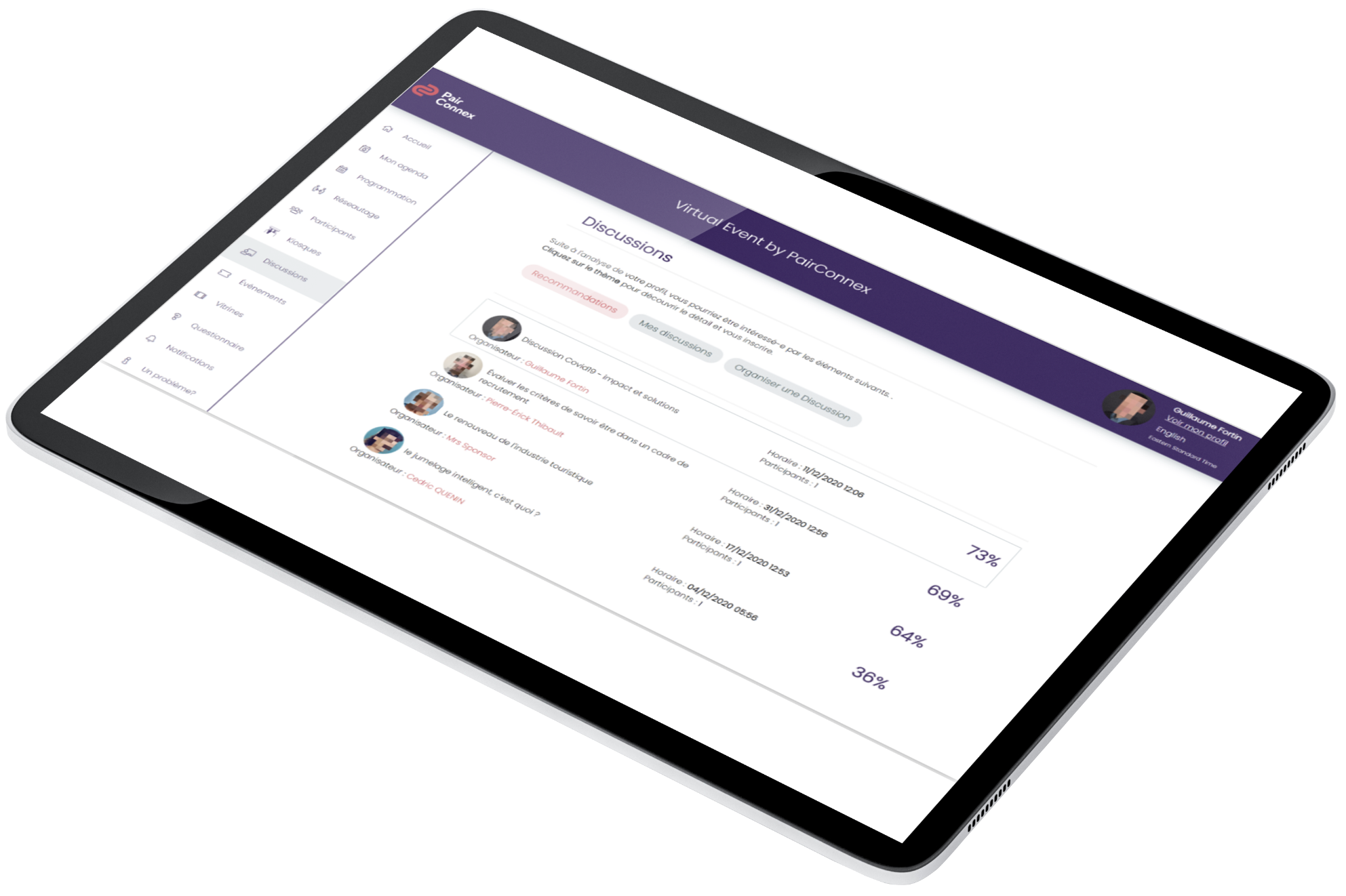
With PairConnex, the interests entered in an attendee’s profile can also support intelligent matchmaking, which presents attendees or exhibitors based on compatibility scores. Organizers can also target communications using profile responses to suggest a relevant activity to a particular group of attendees.
An attendee’s journey could connect a presentation with a themed discussion, followed by a meeting with an expert or exhibitor. The tools make these opportunities visible and accessible while giving attendees the freedom to shape their own experience.
Introducing this journey ahead of time gives attendees a head start. By discovering the activities, the people attending and the opportunities to meet before they arrive, they can plan their choices and reserve the time slots that interest them.
On site, a well-organized welcome, clear directions and easy-to-find information help attendees make the most of what they have chosen. Schedules, locations and changes need to be communicated at the right time. A smooth experience allows attendees to focus on the learning and conversations that brought them to the event.
After the convention, attendees should be able to explain what they gained: an idea to apply, an answer to a problem, a contact to follow up with or a solution to evaluate. These takeaways also help them justify their investment to their organization.
Tools can help maintain that continuity. Session notes, saved connections and notes from meetings can be retained and exported to prepare follow-ups. Resources shared after the event allow learning to continue.
For organizers, the evaluation also benefits from going beyond overall satisfaction: which activities helped attendees reach their goals? What do they intend to put into practice? What was missing? These answers can inform the next edition and help identify what would make attendees want to return.
At PairConnex, we support around 200 events each year. We see organizers experiment with new formats, adapt attendee journeys and find original ways to engage their audiences. This experience helps us offer practical ideas and anticipate potential pitfalls.
Would you like to introduce themed discussion tables, meetings with experts or journeys tailored to your attendees’ interests? Talk to our team. We can help you structure these ideas and use the tools to make them clear and easy for your attendees to access.
1. IACC and Development Counsellors International, IACC 2025 Meeting Room of the Future Report. Survey of 205 planners in Europe and North America. Methodology: p. 3; Figure 5: p. 9; regional analysis: pp. 10–11. Read the source
2. Freeman, Unpacking XLNC: The Future of Adult Learning at Conferences and Trade Shows, Part Two, 2026. Freeman press release published on July 23, 2026, via GlobeNewswire. Read the source
But the attendee experience extends well beyond what happens on stage. It begins before arrival, continues between activities and carries on after departure. Whether it is a convention, a conference, a trade show or a networking event, the entire journey contributes to the value of attending.
At a time when professional content is just a few clicks away, one question deserves a central place in event design: what will attendees experience in person that makes the travel, time and investment worthwhile?
Give the experience around the program the same attention
The IACC 2025 Meeting Room of the Future report illustrates the attention being paid to the overall experience. Among the planners surveyed in Europe and North America, 55% identify a venue’s physical characteristics as one of the most important aspects supporting meeting objectives. Food and beverage offerings and educational content follow, at 50% each. The report notes, however, that content remains the top priority in North America.1
These findings invite us to consider the conditions in which attendees will engage with content and connect with others. Acoustics that make conversation possible, places to sit between activities and meals that leave time for discussion are all choices that shape the experience.
For organizers, this means giving the experience surrounding the program as much care as the program itself. It requires setting aside time, space and opportunities for participation that support the event’s objectives.
Start with what attendees hope to gain
People attending the same convention do not all come for the same reasons. Some want to explore a topic in greater depth or solve a professional challenge. Others are looking for partners, suppliers or peers with whom they can compare practices.
A few questions during registration or profile creation can help identify these expectations: which topics interest them? What challenges do they face? What kinds of connections do they want to make? Their answers can guide both the choice of complementary activities and how those activities are presented.
A session on a management challenge could lead into a peer discussion. A technical topic could be followed by consultations with experts. An attendee looking for solutions could be directed toward relevant exhibitors. Each option becomes another way to address an identified need.
Give attendees an active role
In its 2026 report on learning at conferences and trade shows, Freeman found that attendees would ideally spend 54% of their learning time outside traditional session rooms. Peer conversations, exhibitor interactions and demonstrations are among these learning opportunities.2 This provides a concrete reason to make room for these experiences in the program.
At an event supported by PairConnex, an organizer wanted to structure conversations around shared interests. The solution was simple: themed discussion tables, each limited to ten people. Attendees could reserve a seat at the table whose topic interested them, subject to availability.
This format gave conversations a starting point: a shared topic, a small group and dedicated time to talk. It offered attendees an opportunity to discuss their professional realities with people who had chosen the same subject.
Meetings with experts are another option our clients use. Scheduled time slots allow attendees to book a one-on-one conversation or a small-group meeting. They can ask questions specific to their situation and explore an issue raised during the event in more depth. A partner or sponsor can also contribute by sharing their expertise with attendees, provided the meeting continues to offer meaningful advice.
These formats require preparation: choosing specific topics, explaining what attendees can gain, scheduling sessions that fit with the rest of the program and making sign-up simple. Reservations then help organizers gauge interest and adjust the offerings as needed.
Help each attendee build their own journey
When presentations, discussions, consultations and exhibitor visits are all available, attendees need to be able to identify the options that meet their needs. This is where an event platform can contribute directly to the experience.
A program organized by theme makes it easier to explore the options. Activity selection tools allow attendees to reserve a place in a workshop or at a discussion table and build a personalized schedule. Exhibitors can be grouped by category to make relevant solutions easier to find.
With PairConnex, the interests entered in an attendee’s profile can also support intelligent matchmaking, which presents attendees or exhibitors based on compatibility scores. Organizers can also target communications using profile responses to suggest a relevant activity to a particular group of attendees.
An attendee’s journey could connect a presentation with a themed discussion, followed by a meeting with an expert or exhibitor. The tools make these opportunities visible and accessible while giving attendees the freedom to shape their own experience.
Make the journey seamless before and during the event
Introducing this journey ahead of time gives attendees a head start. By discovering the activities, the people attending and the opportunities to meet before they arrive, they can plan their choices and reserve the time slots that interest them.
On site, a well-organized welcome, clear directions and easy-to-find information help attendees make the most of what they have chosen. Schedules, locations and changes need to be communicated at the right time. A smooth experience allows attendees to focus on the learning and conversations that brought them to the event.
Help attendees recognize the value of attending
After the convention, attendees should be able to explain what they gained: an idea to apply, an answer to a problem, a contact to follow up with or a solution to evaluate. These takeaways also help them justify their investment to their organization.
Tools can help maintain that continuity. Session notes, saved connections and notes from meetings can be retained and exported to prepare follow-ups. Resources shared after the event allow learning to continue.
For organizers, the evaluation also benefits from going beyond overall satisfaction: which activities helped attendees reach their goals? What do they intend to put into practice? What was missing? These answers can inform the next edition and help identify what would make attendees want to return.
Draw on our team’s experience
At PairConnex, we support around 200 events each year. We see organizers experiment with new formats, adapt attendee journeys and find original ways to engage their audiences. This experience helps us offer practical ideas and anticipate potential pitfalls.
Would you like to introduce themed discussion tables, meetings with experts or journeys tailored to your attendees’ interests? Talk to our team. We can help you structure these ideas and use the tools to make them clear and easy for your attendees to access.
Sources
1. IACC and Development Counsellors International, IACC 2025 Meeting Room of the Future Report. Survey of 205 planners in Europe and North America. Methodology: p. 3; Figure 5: p. 9; regional analysis: pp. 10–11. Read the source
2. Freeman, Unpacking XLNC: The Future of Adult Learning at Conferences and Trade Shows, Part Two, 2026. Freeman press release published on July 23, 2026, via GlobeNewswire. Read the source